
Spotlight: Sentai – Supporting independence through voice-enabled care technology
The CHI-Zone small grants programme for CareTech Developers supports innovators to explore, develop and test digital solutions with adult social care providers and support organisations across the Liverpool City Region.
Our Adult Social Care Testbed, delivered in partnership with National Care Forum, involves not-for-profit providers operating across the six local authorities which make up the Liverpool City Region. It functions as a collaborative environment where SMEs can solicit feedback from care professionals and people with lived experience about new and emergent technologies, co-design software and hardware solutions, and generate real-world evidence about their efficacy through digital trials.
One of our grant recipients is Sentai – a voice-enabled, AI-powered digital care companion, designed to support older and vulnerable adults in their day-to-day lives.
As the UK's population continues to age, more people are looking for ways to remain independent at home while staying connected to the people who support them. At the same time, care providers and health services are under increasing pressure to deliver high-quality care with limited resources. Sentai was created to help bridge that gap.
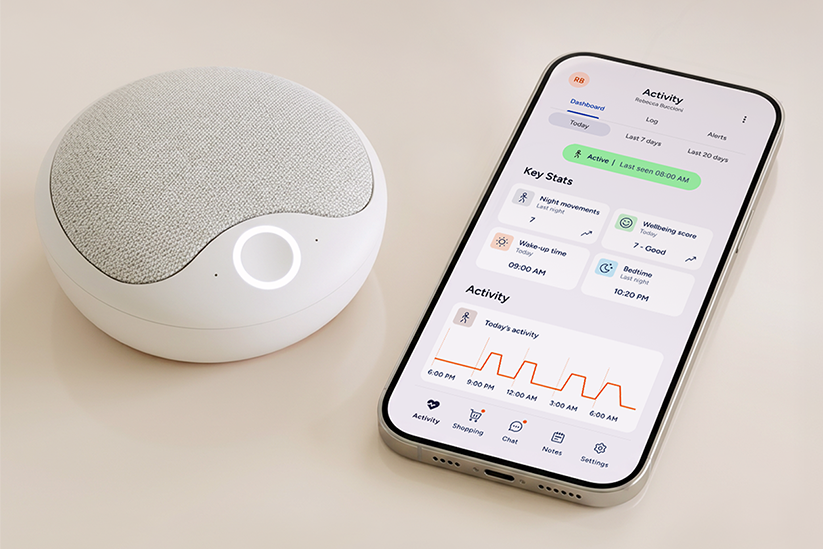
Sentai is a voice-enabled, AI-powered digital care companion designed to support older and vulnerable adults in their day-to-day lives. Through natural conversation, wellbeing check-ins, reminders and family messaging, Sentai helps people maintain their independence while providing reassurance to family members, carers and support networks. Unlike traditional smart speakers, Sentai has been designed specifically around the needs of older adults and prioritises privacy, wellbeing and meaningful connection.
The company was founded by a team with strong technology expertise and personal experience of supporting ageing relatives. Those lived experiences helped shape a solution focused not simply on task management, but on helping people feel connected, confident and supported in their own homes. Through a connected app, family members and carers can stay informed about wellbeing, routines and daily engagement, creating a shared circle of care around the individual.


Sentai applied for the CHI-Zone small grants programme to help generate robust evidence for the impact of its technology in real-world care settings. A key focus of the for them was working alongside researchers, care professionals and service users to co-produce a testing environment where the technology can be evaluated with people who could benefit from it most. Through the Adult Social Care Testbed, they are to explore whether solutions like Sentai can help care providers identify changes in health and wellbeing earlier, support preventative approaches to care and enable people to remain living independently for longer. The team is particularly interested in understanding how technology can support earlier detection of issues such as falls, urinary tract infections and other signs of decline that can often lead to increased care needs or hospital admissions.
Alongside gathering evidence of outcomes for service users, this collaboration will explore how technology can support care professionals and local authorities to make more informed decisions about care provision. By building confidence in digital tools and demonstrating their value through real-world evidence, Sentai hopes to contribute to a future where technology complements human care and helps services focus their resources where they can have the greatest impact.
Lynda Lowe, CMO at Sentai, said:
“Our project aims to be a pathfinder study which gathers the data needed to show that local authorities across the whole of the UK could optimise their prescription of homecare hours, resulting in the right amount of care being given to service users.”
For Sentai, one of the most valuable aspects of working with the CHI-Zone is the opportunity to collaborate directly with researchers, care organisations and citizens. By bringing together expertise from across the health and care system, the partnership aims to generate the evidence needed to support wider adoption of technologies that can improve outcomes for both individuals and care providers.
Applications are now open for the next round of CHI-Zone small grants, supporting innovators who are developing solutions to address challenges across health and care. If you have an idea, product or service that could benefit from access to academic and tech expertise, real-world testing environments and collaboration with health and care partners, find out more and apply today.