
From AI-powered sleep support to a neurodivergent travel app: hidden entrepreneurs generate £5.2m social return
A former football coach who developed an AI-powered sleep platform after breaking his back and a travel agent behind a travel review app for the neurodiverse are among a group of Liverpool City Region entrepreneurs who have generated more than £5.2m in social value from a £500,000 investment.
The entrepreneurs are part of Citizen First LCR, a pioneering programme backed through the Liverpool City Region’s Life Sciences Innovation Zone, that helps people turn lived experience of health and care challenges into innovative new businesses.
Combining specialist business support from Public Life, and access to cutting-edge technology from the University of Liverpool, the programme creates a unique environment in which participants can build and launch businesses to improve health and care outcomes.
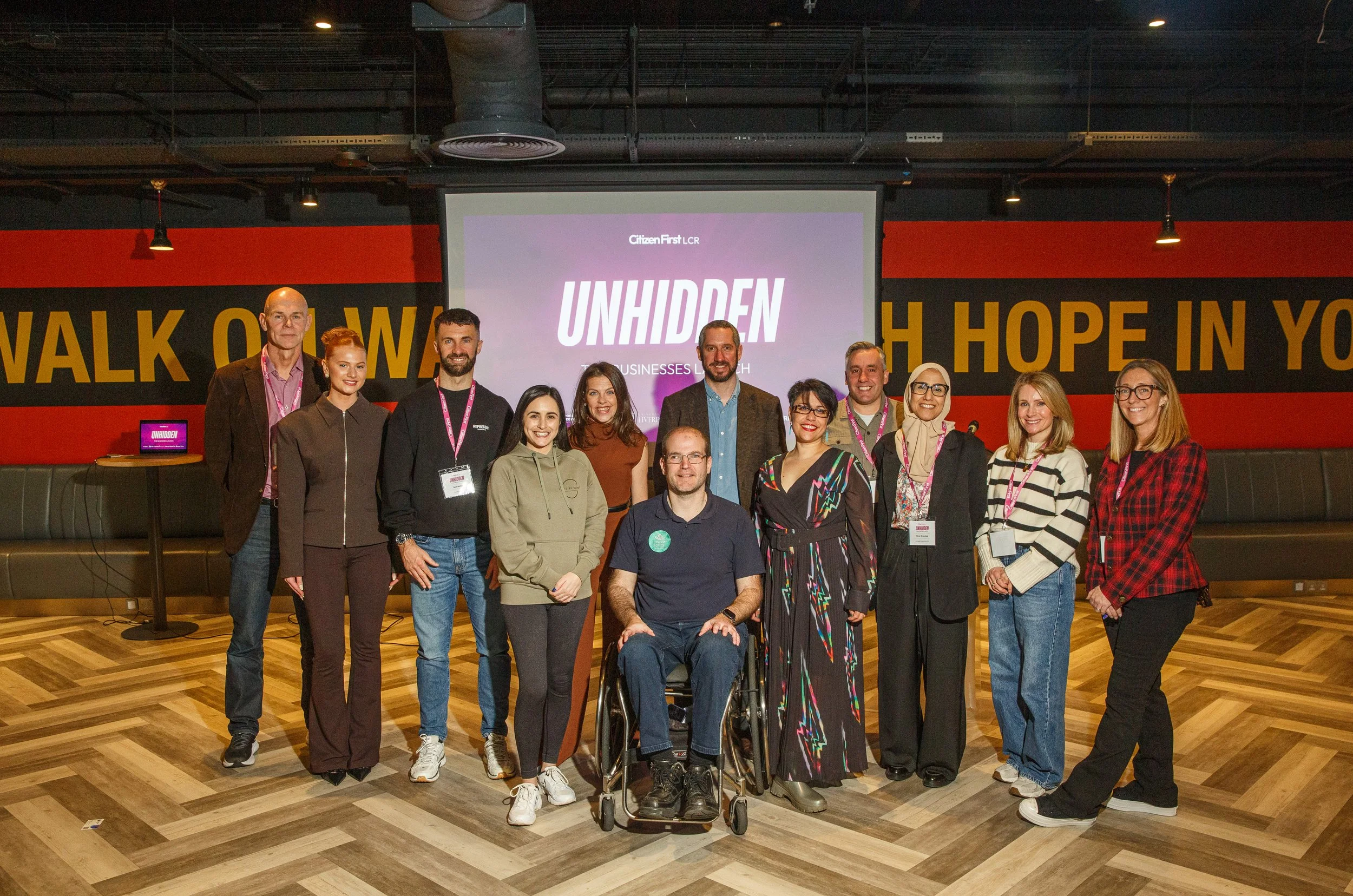
An independent evaluation by Brunel University of London and Northumbria University found the programme had delivered more than a tenfold return on investment during its first year.
And the authors hailed the ‘truly innovative, life-changing' scheme as ‘a missing layer of civic infrastructure that warrants expansion to other towns and city regions’.
Among the programme's standout successes is MySleepHealth, an AI-guided sleep support platform developed by Runcorn entrepreneur and former Manchester United football coach Sean Bailey.
After suffering a serious spinal injury while playing football, Sean experienced the impact poor sleep can have on health and wellbeing. He created the platform to support people living with autism, ADHD, insomnia and shift work disorder, combining AI technology with evidence-based sleep guidance.
In the space of just 12 months the platform has been built, investment secured, and trials about to begin in NHS settings – with Sean accepted onto Alder Hey Children's Hospital's prestigious innovation programme.
Another participant, south Liverpool travel agent Faye Boswell, has developed Sensified Spaces, a sensory reviews platform designed to help neurodivergent people navigate public places with confidence.
The review app enables users to access information about sensory environments and share experiences. With investment secured and backing from a national healthcare provider, it has already secured partnerships with venues attracting a combined annual footfall of more than 52 million people, including Liverpool ONE and Liverpool John Lennon Airport.
The ventures are among nine businesses created through Citizen First LCR during its first year. Together they have secured more than £376,000 in investment, grant funding and commercial partnerships.
Liverpool City Region Cabinet Member for Innovation Cllr Liam Robinson said:
"These results show the enormous value that can be unlocked when we invest in the talent that already exists within our communities.
"Citizen First is helping people with lived experience of health and care challenges develop solutions that can improve lives, create businesses and support economic growth.
"The remarkable return on our investment demonstrates that backing local people isn't just the right thing to do, it's a smart investment that delivers real returns for communities, public services and our economy."
James Green, founder and CEO of Public Life, said:
“What these nine entrepreneurs have built in twelve months is remarkable – but they're not the exception. The people closest to our biggest social challenges often have the best business ideas – but the least ability to act. What the Liverpool City Region has pioneered is a way to find those hidden entrepreneurs, give them the support they need, and systematically mobilise a whole place behind them. There are hidden entrepreneurs in every town and city in the country – and Liverpool has just shown the country how to unlock them.”
Professor Iain Buchan, W.H. Duncan Chair in Public Health Systems, Associate Pro Vice Chancellor for Innovation, and Director of the Civic Health Innovation Labs (CHIL) said:
“This significant economic return is testament to the pioneering entrepreneurs who have used their lived experience and deep understanding of their communities to develop practical solutions to important health and care challenges.
“Through their passion and commitment, they have worked with scientists, engineers, health and care professionals, and established industry partners to develop ground-breaking solutions.
“This work and its clear success epitomises our University’s civic mission - to push boundaries in science and technology while addressing the real needs of our communities.”
The programme brings Public Life’s Citizen First model to the City Region for the first time. It provides participants with a Real Living Wage, seed funding and support with entrepreneurship and business development.
Participants also benefitted from access to cutting-edge technology expertise provided by the University of Liverpool, helping them develop and scale their ideas.
Over 12 months, participants worked day-to-day with Public Life's delivery team, alongside researchers, technologists and health experts through the University of Liverpool's Civic Health Tech Innovation Zone (CHI-Zone), to develop and refine their ideas.
One of the evaluation report’s key findings was the powerful impact on the City Region.
The programme recruited through a CV-less process that prioritised lived experience, insight and potential over formal qualifications. An open call for applicants was 24 times oversubscribed – with 87% of the 200 applicants having direct experience of economic disadvantage.
More than 50 organisations across the City Region contributed expertise, mentorship and support and thousands of local people benefited directly from the ventures during the first year.
This has prompted other city regions to explore bringing the pioneering approach to their areas.
The programme is co-funded by the Fusion21 Foundation, with additional support from Torus Foundation, Riverside and Livv Housing Group.
Dr Annemarie Naylor, Director of HealthTech and Innovation Growth and the University of Liverpool, said:
“Citizen First embodies exactly what our Liverpool 2031 Strategic Framework sets out to achieve - by connecting our world-leading expertise in data science, health and care research with the real needs of our city region, the programme turns academic strength into tangible economic, social and health benefit for the communities we serve. It is a powerful demonstration of the University as a civic anchor and shows what the University of Liverpool can accomplish when excellence and purpose move together.”
Jo Hannan, Head of the Fusion21 Foundation, added:
“Citizen First shows the difference funding can make when it is rooted in people’s lived experience and focused on lasting impact. The programme reflects the Fusion21 Foundation’s priorities across health and wellbeing, employment and skills, and financial inclusion and resilience.
“We’re delighted to see these results, demonstrating what is possible when people are given the support to develop ideas that improve lives, create opportunities and deliver impactful outcomes.”
The entrepreneurs:
Faye Boswell, Sensified Spaces
Faye came to Citizen First after working as a travel agent on the high street in Liverpool. Having a sister and young nephew who are both neurodivergent, her idea grew from watching them struggle to plan days out searching TripAdvisor for sensory reviews until a trip to the Kennedy Space Centre, where a simple sign rating a ride's sensory impact gave her the blueprint.
Twelve months later, Sensified Spaces is a functioning platform for neurodivergent people navigating public spaces. She has secured thirteen Liverpool City Region pilot partners, seven already active, including Liverpool John Lennon Airport, the M&S Bank Arena and Liverpool ONE. She has collected over 200 sensory surveys, a working app in testing, and a paid B2B pilot with a national healthcare provider across five clinics.
Sean Bailey, MySleepHealth
When Sean Bailey broke his spine, he was told he might never walk again. During a long rehabilitation he noticed that his neurological and physical recovery accelerated dramatically whenever he got deep, high-quality sleep. Realising that 1 in 3 UK adults quietly battles chronic sleep issues, Sean knew he had found his mission.
In just twelve months, MySleepHealth has grown from a single local clinic into a digital health platform with an NHS trial pathway. The standalone mobile application is fully built and actively undergoing phase testing, with trials agreed in two NHS settings. Sean has secured investment and grant funding and has been accepted onto Alder Hey Children's Hospital's innovation programme.
Frankii Panchoo, Hair: Anywhere
As a local hairdresser, Frankii saw how people with mobility challenges are quietly excluded from something most take for granted. Around 80% of UK salons are inaccessible in some way. She is building the UK's first fully accessible mobile salon to bring the high street to them.
First prototype van designed and built; currently in pilot, with plans to scale to a national fleet.
Leanne Lucas, Let's Be Blunt
Leanne was the yoga teacher who survived the July 2024 Southport attack. She is building a social business to replace sharp-tipped kitchen knives with rounded ones, a single design change that aims to reduce knife-related harm at its source.
CIC established; national partnership with Viners, the Liverpool-based UK knife manufacturer; rounded-tip knives carrying her message launched across hundreds of Morrisons supermarkets nationwide in March 2026.
Katie Bowater, Young Entrepreneurs Club
As a young founder herself, Katie saw how lonely and challenging setting up a business can be. She has built Young Entrepreneurs Club, the UK's first network for founders under 35, combining business support with mental wellbeing.
15 events engaging 300 young people over the past year; the YEC app built to grow reach; a subscription membership launched and now generating revenue.
Ceara Byrne, Laurel's Wood
Inspired by how nature transformed life for her own son, Ceara runs nature-based wellbeing programmes for children in a once-neglected woodland, with a particular focus on those with special educational needs.
Sessions sell out weekly, with thousands participating in person over the past year; social investment secured to launch the Laurel's Wood Academy for young people at risk of becoming NEET.
Abeer Al-awlaqi, AA Health & Nutrition
A registered nutritionist, Abeer saw women struggling silently with menopause symptoms they didn't understand, particularly in minority ethnic communities like her own, where women are around 65-70% less likely to receive HRT. She has built a culturally informed menopause and nutrition service delivering 1:1 clinics, community programmes and workplace partnerships.
Funding secured; new paid-for offer developed and piloted.
Mat Richards, Inclus-Ability CIC
Excluded from physical activity as a disabled child, Mat is building the inclusive sport experiences he wished he'd had, combining accessible activity, media and immersive technology, co-designed with disabled people.
Funding secured and revenue generated; business delivering regular sessions in community settings, including a local school and a care home.
Lorcan McGuinness, Braywell Robotics
Lorcan has been building robots in his bedroom since he was 16. He joined Citizen First to turn that passion into robots that improve people's lives.
Working prototype robotic arm built; applications being explored with the Royal Liverpool Hospital, including improving working conditions in surgery. The programme has led him to choose further study alongside his business ambitions, to deepen the expertise behind the business.