
The first workshop of the 2026 CHI-Zone Fellowship brought together a brilliant mix of clinicians, academics, local businesses, industry, data scientists, public sector and community leaders, all united by a shared interest in reimagining the future of long-term care.
As the Fellowship begins its exploration of Person-Centred Innovation in Complex Long-Term Care, this opening session set the scene for the challenges ahead, while reminding us of the opportunities that emerge when people from different disciplines and sectors come together around a common purpose.
The day opened with a welcome from our Commercial Education and Training Manager, Claudia Fryer Russell, who outlined the vision for the programme and the journey that the Fellows will take over the coming months. The Fellowship has been designed not just as a learning experience, but as a space for connection, collaboration and experimentation, where diverse perspectives can help shape new approaches to some of the most pressing challenges facing health and care.
Understanding Complexity in Long-Term Care
The speakers explored why long-term conditions are one of the biggest challenges facing health and care services today.
Dr Eduard Shantsila, Head of the Department of Primary Care and Mental Health at the University of Liverpool, focused on the realities of complex care and multimorbidity. He highlighted how health and care systems are often designed around individual conditions, while many people live with multiple physical, mental and social challenges at the same time. His presentation emphasised the need for innovation that reflects the complexity of people's lives and the interconnected services and support networks they rely on.
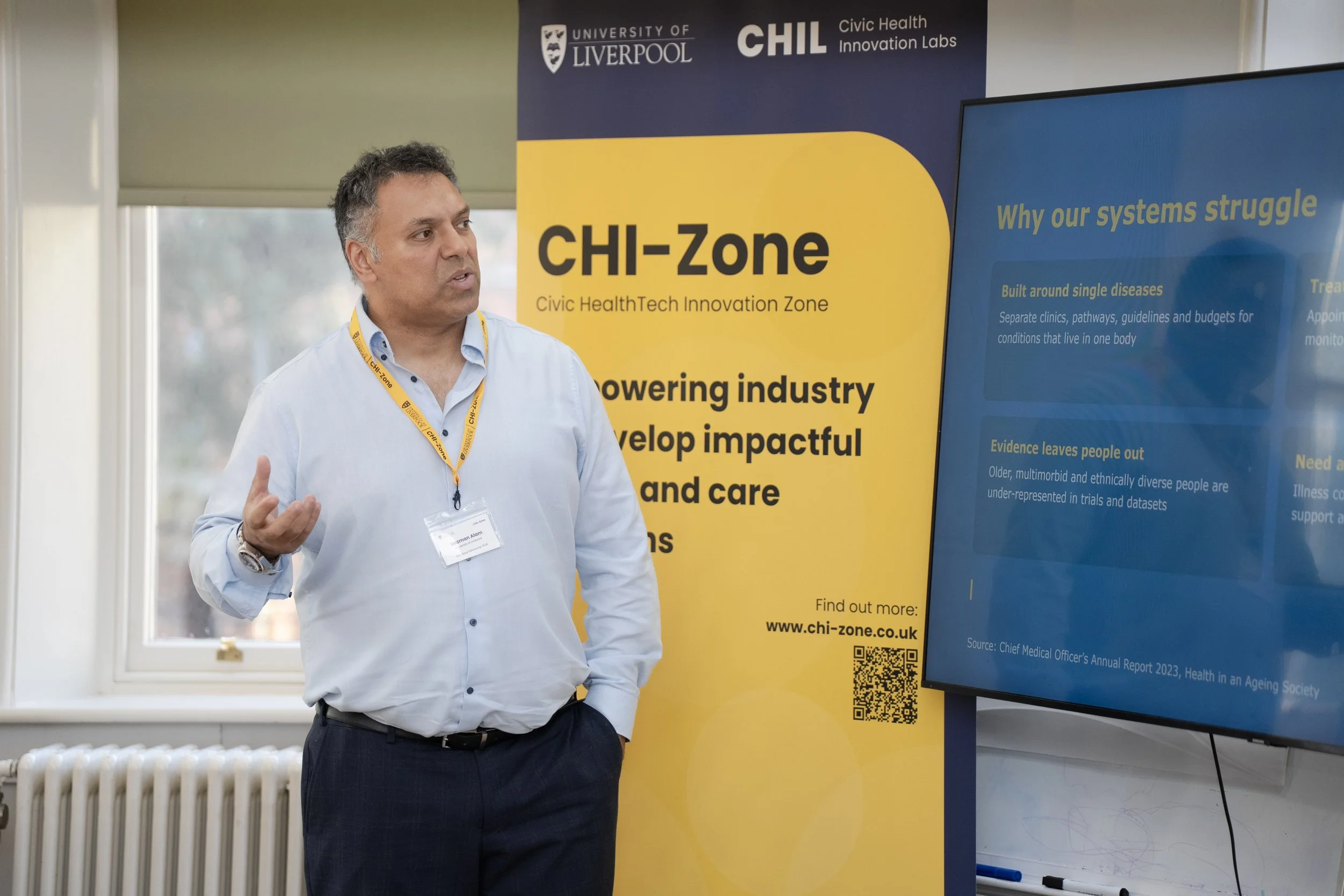
Building on these themes, Dr Uazman Alam, Reader in Cardiovascular and Metabolic Medicine at the University of Liverpool, looked at the growing prevalence of chronic illness and multimorbidity. He encouraged fellows to think beyond individual diagnoses and consider the wider experience of living with long-term conditions. A key theme of his talk was understanding what matters most to people, rather than focusing solely on what matters to healthcare systems. This people-centred perspective aligned closely with the Fellowship's focus on innovation that improves everyday lives.
Together, the presentations highlighted the scale and complexity of long-term care and reinforced the need for fresh approaches that bring together different perspectives, expertise and experiences.
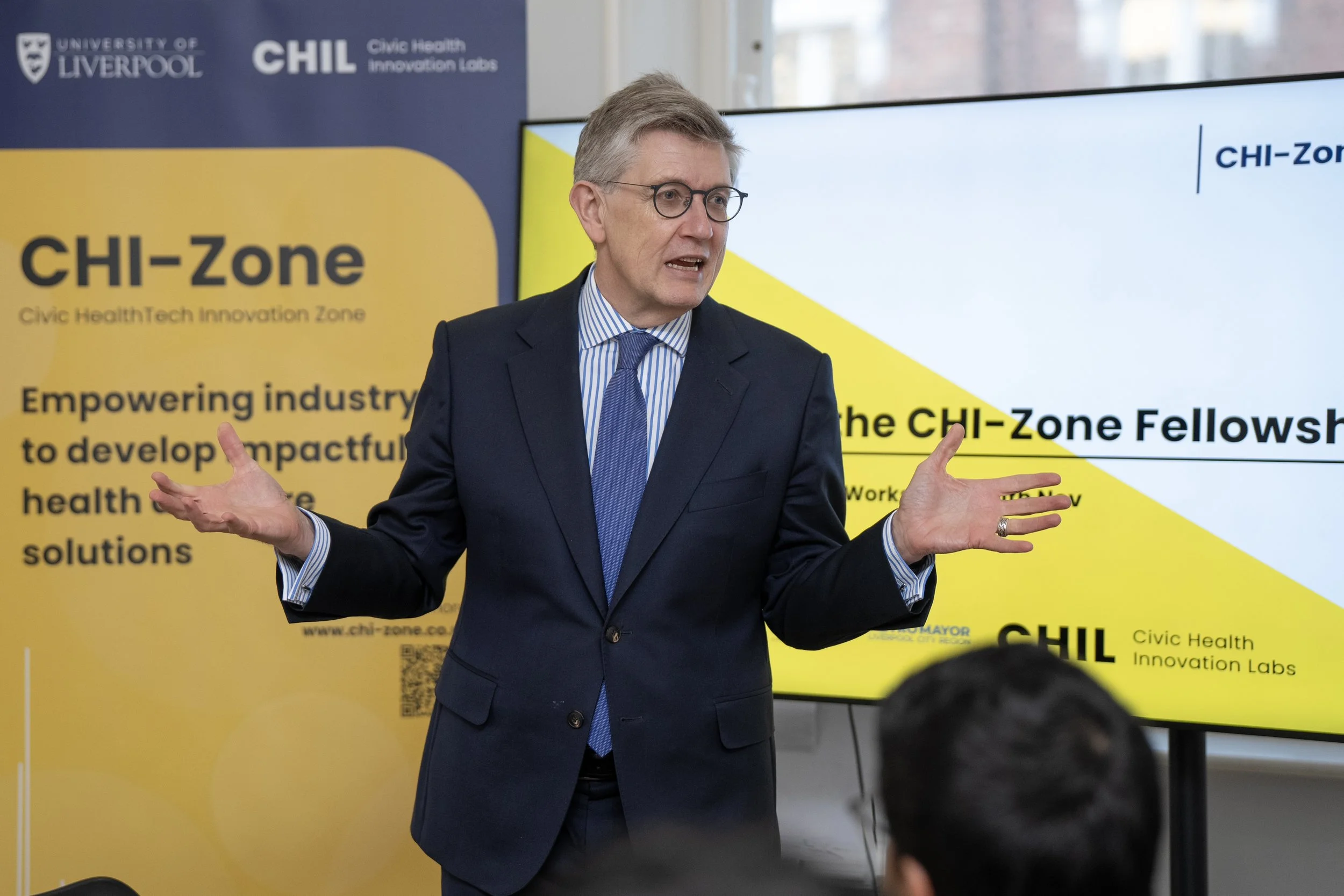
This theme continued in a welcome from Prof Iain Buchan, director of Civic Health Innovation Labs (CHIL), who encouraged fellows to take a systems approach to addressing complex care challenges. He spoke about the importance of collaboration across disciplines, sectors and communities, recognising that meaningful progress often happens when people with different skills and experiences work towards a shared goal.
Building a Community of Fellows
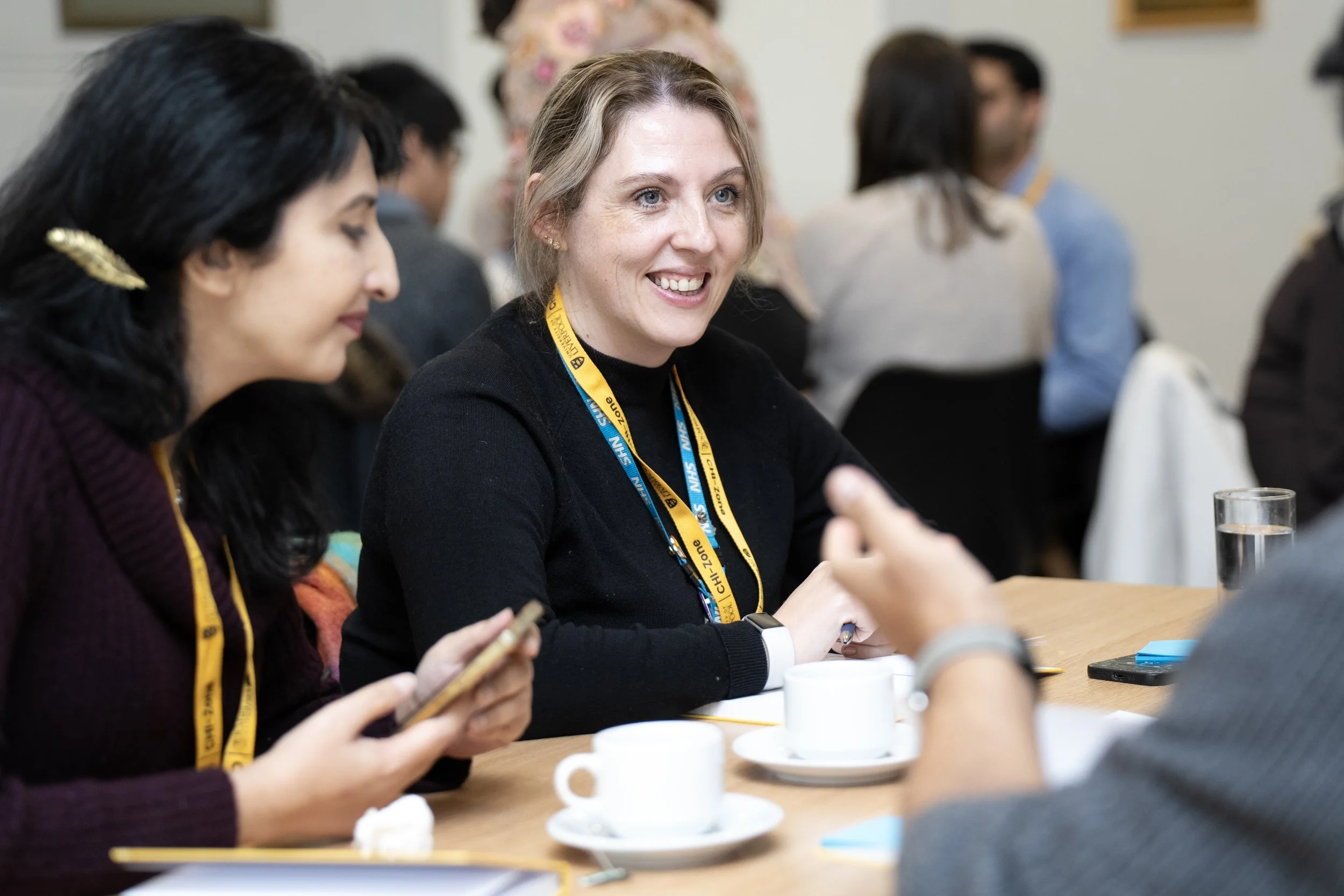
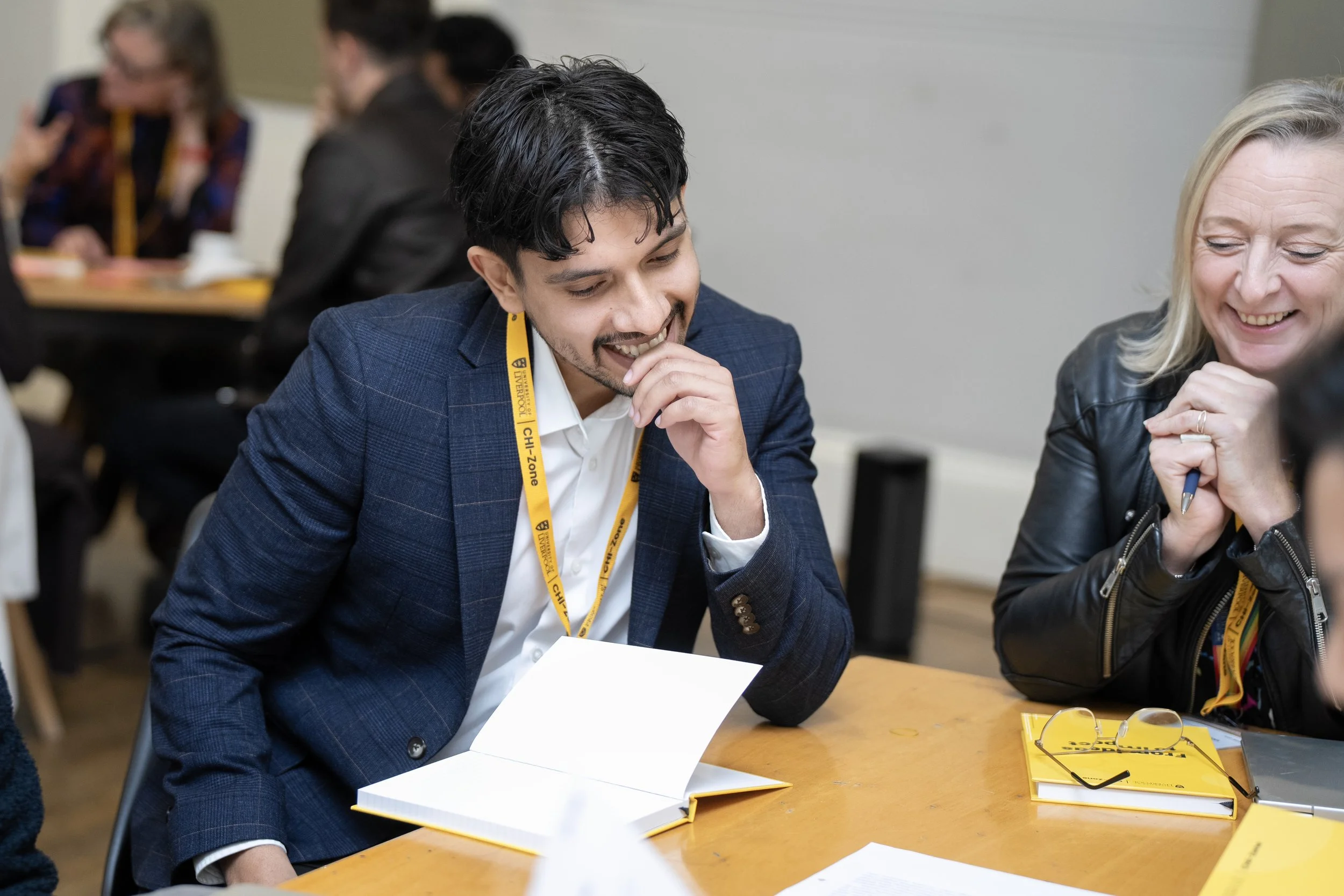
Alongside the presentations, much of the value of the day came from the discussions between the fellows. Participants were invited to reflect on what person-centred innovation in complex long-term care means in their own roles and organisations. The conversations brought together perspectives from clinical practice, research, digital innovation, community engagement and service design. The fellows identified similar challenges and opportunities, sparking conversations that will continue throughout the programme.
The session also gave the fellows a chance to connect with people beyond their usual professional networks. Members of the wider CHIL team and alumni from the 2025 Fellowship cohort joined the day, creating opportunities for networking and the sharing of experiences.
Looking Ahead
As the first workshop drew to a close, conversations continued across the room, with fellows exchanging ideas and beginning to explore potential collaborations.
The challenges surrounding complex long-term care are significant, but the day reinforced an important message: progress depends on bringing together different perspectives and being open to new ways of thinking. Through collaboration, shared learning and a focus on the needs of people living with long-term conditions, the Fellowship aims to help turn ideas into practical improvements.
We look forward to seeing how the discussions from this first session develop over the coming months, and what new partnerships, projects and innovations emerge as this year's fellows continue their journey.
To stay up-to-date with our latest opportunities and projects, follow us on LinkedIn.