
Spotlight: Carpe Care – capturing better insight into epilepsy care
The CHI-Zone small grants programme for CareTech Developers supports innovators to explore, develop and test digital solutions with adult social care providers and support organisations across the Liverpool City Region.
Our Adult Social Care Testbed, delivered in partnership with National Care Forum, involves not-for-profit providers operating across the six local authorities which make up the Liverpool City Region. It functions as a collaborative environment where SMEs can solicit feedback from care professionals and people with lived experience about new and emergent technologies, co-design software and hardware solutions, and generate real-world evidence about their efficacy through digital trials.
One of these innovators is Carpe Care – a start-up, developing carer-worn video technology to capture neurological events.
Founder Anna O’Gara has a background in care and neuroscience. She has explored how neurological conditions influence care while working for a provider supporting adults with learning disabilities. This included a focus on how seizures were recorded in practice. Supporting individuals during seizures highlighted the realities of care delivery in high-pressure situations, where staff are managing safety, monitoring the individual and coordinating support at the same time.
Capturing an accurate record afterwards is difficult - what is written is shaped by memory and time pressure. Staff prioritise the immediate needs of the individual, which affects what can be observed, remembered and documented. This creates a gap between what happens and what is recorded. Written accounts can miss key details or include information that is not clinically useful, limiting their value in supporting diagnosis and treatment decisions.
There is also a time burden. Documentation following incidents can take a significant portion of a shift, adding pressure to already stretched teams.
Carpe Care was founded in response to these challenges, with a focus on improving both the quality of information captured and the experience of recording it. Anna O’Gara is creating a hands-free approach to recording seizure activity through carer-worn cameras linked to a digital platform. Rather than relying solely on retrospective written accounts, the system captures events as they happen, creating a record that can support documentation and be shared with clinicians where appropriate.
Better quality seizure data has the potential to improve outcomes for people living with epilepsy. Clinical decisions often rely on witness accounts and patient history; when records are incomplete or inconsistent, this can affect diagnosis and treatment planning.
By providing clearer insight into seizure activity, Carpe Care aims to support more informed decision-making and stronger collaboration between care teams and clinicians. This also aligns with clinical guidance that highlights the value of video alongside traditional reporting methods.
As the founder, Anna O’Gara, explains:
“Carpe Care's approach will leave care staff's hands and minds free to care. By capturing objective information through carer-worn camera footage, it adds valuable detail to records that can't be explained with words alone.”
The Carpe Care journey has been shaped by Anna O’Gara’s participation in the Care Innovation Challenge. Run by the National Care Forum and Care Innovation Hub, the Challenge brings together people working across care, technology, academia and lived experience to develop solutions to some of the sector’s biggest challenges. For Carpe Care, the programme provided an opportunity to test early ideas, gain feedback from different perspectives and shape the concept into a solution.
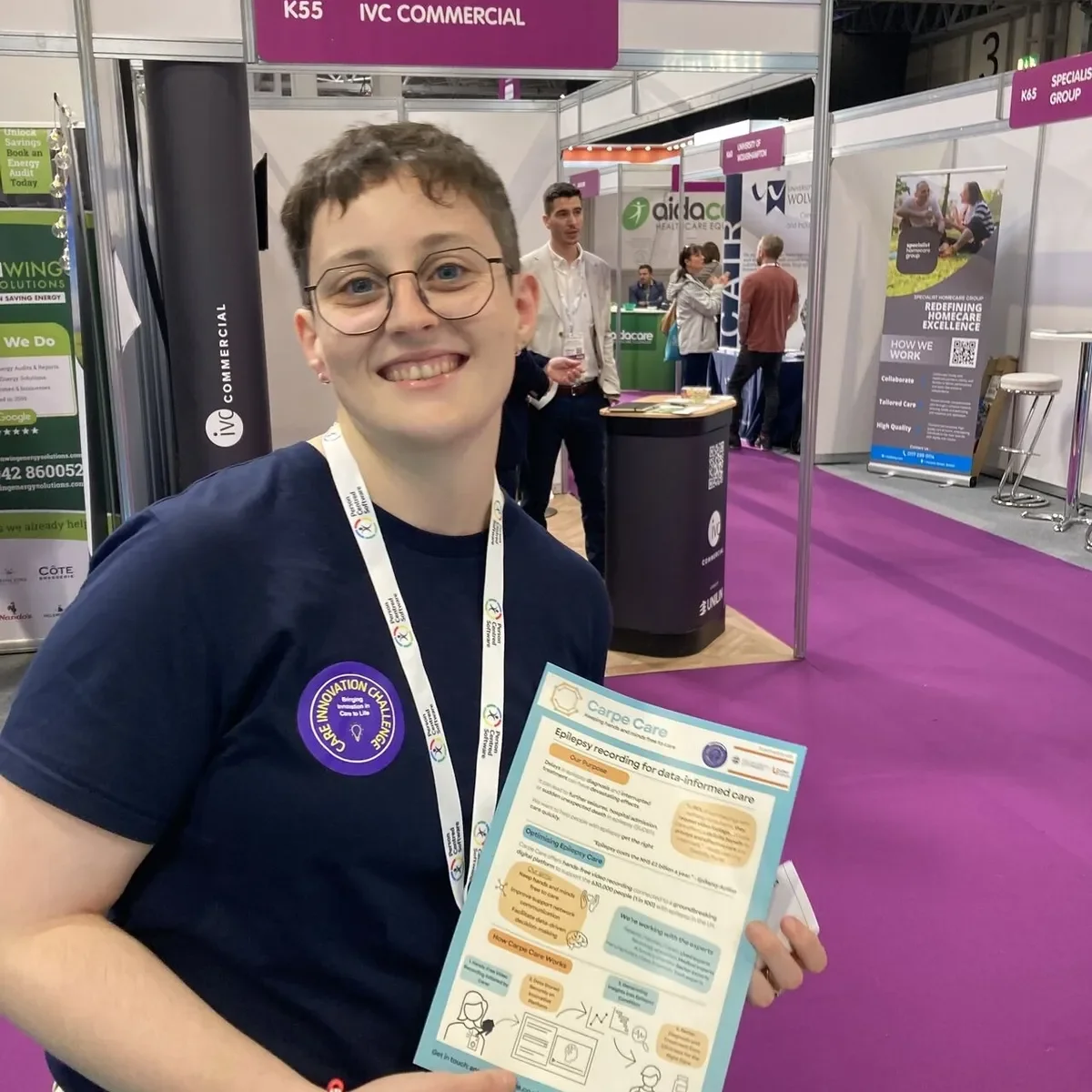
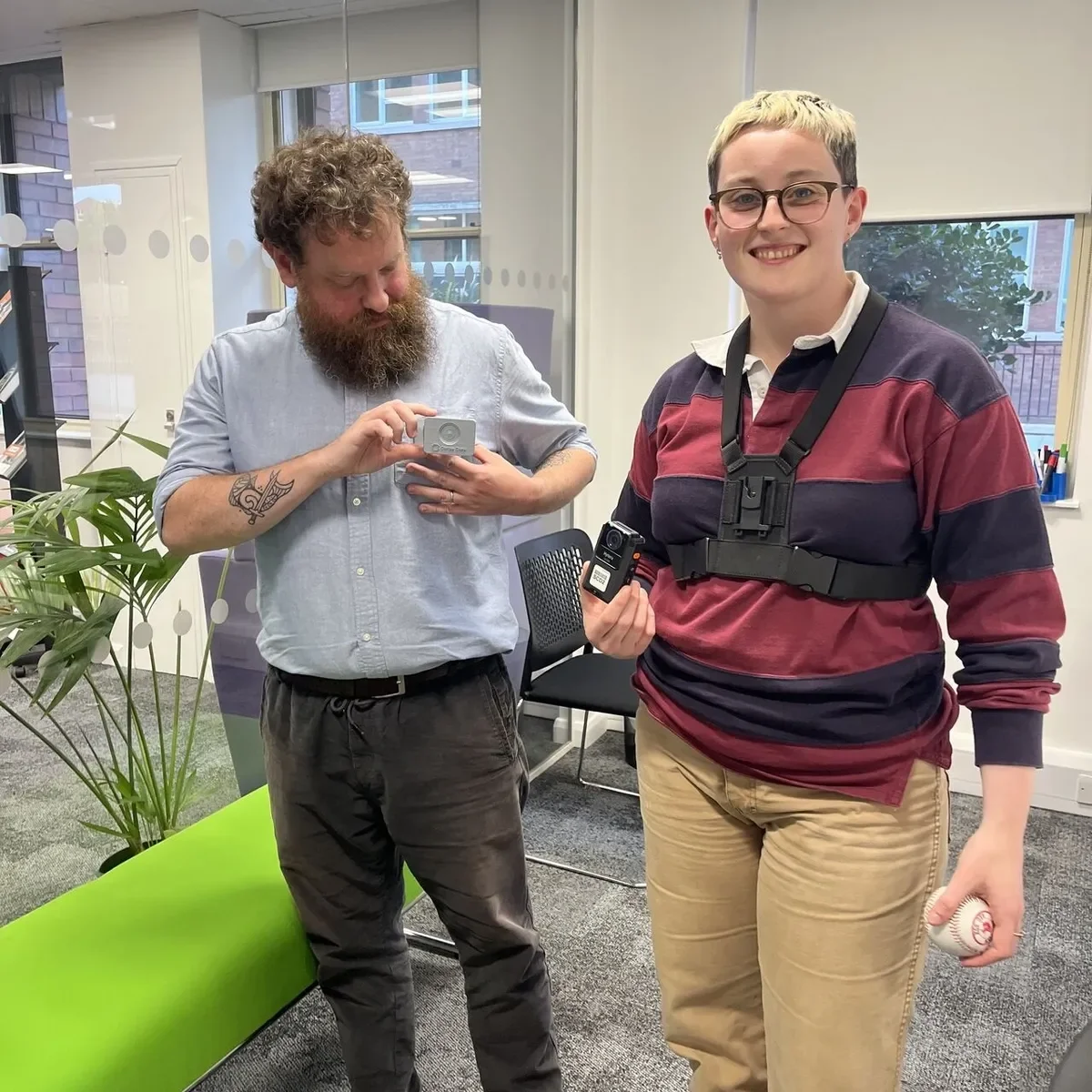

Through the CHI-Zone CareTech Developers small grants programme, this has continued. The Adult Social Care Testbed has enabled direct engagement with care providers, using service design principles to validate and test the research in real world settings, helping to validate assumptions and refine the service. The University of Liverpool’s Civic Health Innovation Labs (CHIL) team helped strengthen how the problem and solution are framed, while the Virtual Engineering Centre (VEC) has supported technical development of the prototype.
The next phase for Carpe Care is testing its minimum viable product within live care settings. This will involve deploying the system in practice, capturing seizure events, supporting record creation and enabling appropriate sharing of information with clinicians. The aim is to understand how the solution performs across the full care pathway and how it integrates into everyday workflows.
This stage will be critical in building evidence around usability, impact and scalability, as Carpe Care moves towards wider adoption across adult social care.