
University showcases its leading work in adult social care
The University of Liverpool’s use of Artificial Intelligence (AI), Augmented Reality (AR) and data could help shape the future of adult social care in the UK. Reflecting this, the University, alongside the National Care Forum (NCF), recently welcomed members of the Casey Commission team to present its work on transforming the sector.
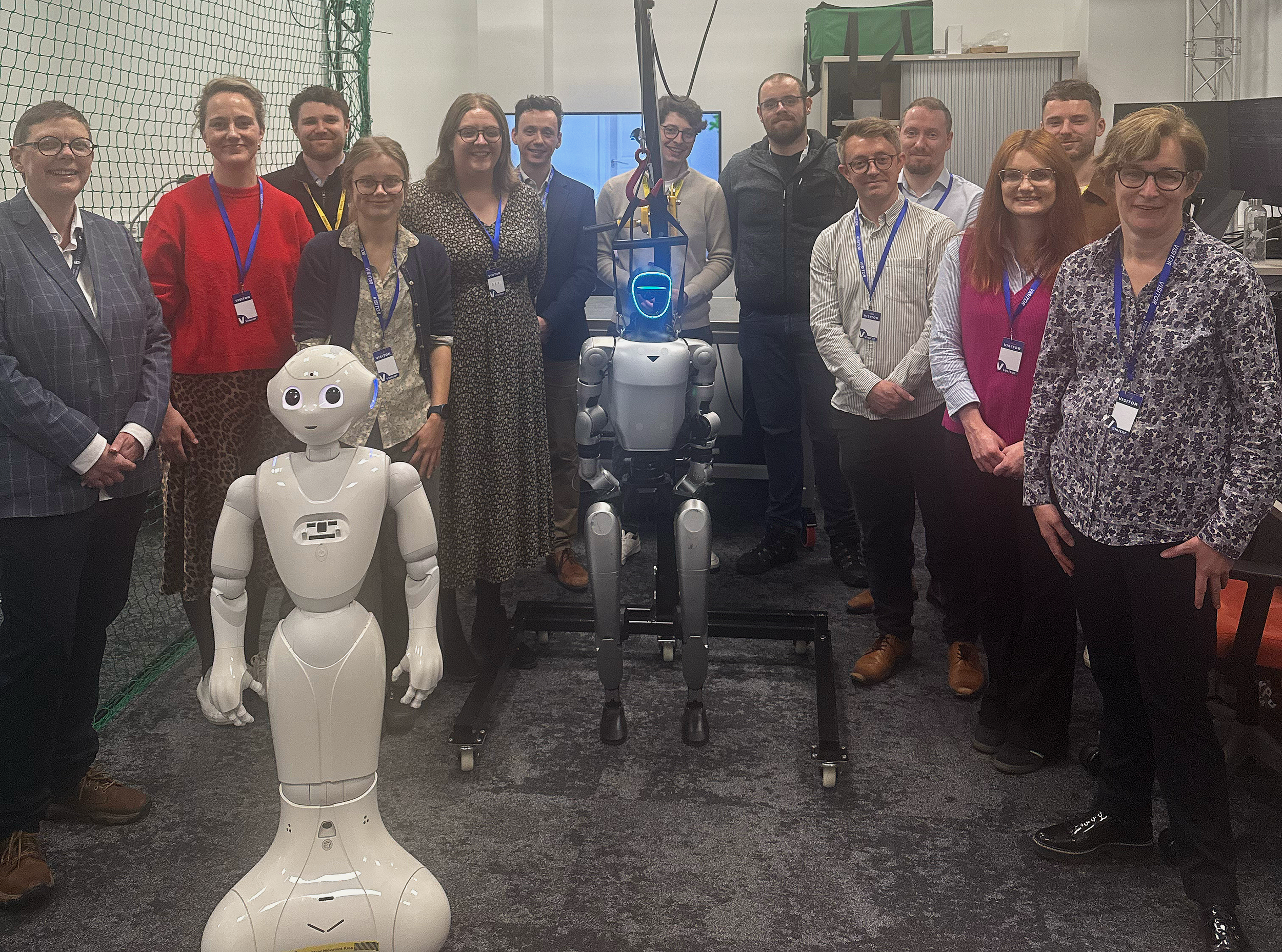
On 16 April, representatives from the Commission visited the city as part of their Independent Commission on Adult Social Care, which will recommend how to reform the adult social care system.
Here they were introduced to the Adult Social Care Testbed that has been established in partnership with the University of Liverpool through its Civic HealthTech Innovation Zone (CHI-Zone) programme. The testbed aims to develop innovative tech products and services, catalyse the use of provider data and upskill the care workforce in the Liverpool City Region.
During the visit, the delegation was introduced to testbed members and a group of participating industry partners alongside members of the NCF team and CHI-Zone team.
They also toured the University’s Digital Innovation Facility (DIF). which combines cutting-edge equipment, innovation and world-class research across multiple technology areas including robotics, data analytics, visualisation, artificial intelligence, advanced simulation, and modelling. Here, guests explored the huge potential for technology informed care and support underpinned by AR and AI, and considered how CareTech solutions, when ethically designed alongside people and the workforce, can augment care provided by humans. There was an opportunity to explore the Liverpool MetaCity map, which provides a 3D representation of the city region and plots out the footprint of each of the testbed members’ services - showing the potential for layering data and tools to demonstrate the impact care and support services have on local communities, to inform local strategy and the design of complimentary digital interventions. Finally, a chance to engage with some future focus on the scope for embodied AI to help tackle workforce shortages, with ambitious plans to train robots to automate elements of some ‘behind the scenes’ functions in care services over the coming decade.
This was followed by a roundtable discussion covering three core areas; how the testbed was working with technology suppliers to support innovation in care delivery through a related small grants programme, drawing in the expertise of the University to work with testbed members to harness the power of data to drive more effective and efficient delivery of care, and finally a focus on the digital skills needed to support the workforce now and in the future.
The day concluded with a visit to a testbed member, Parkhaven Trust headquarters in Maghull. Here, the Casey Commission visitors got to experience care technology in action, including the circadian lighting and acoustic monitoring that Parkhaven Trust have implemented to enhance their dementia care offer.
Dr Annemarie Naylor MBE, Director of HealthTech and Innovation Growth at the University of Liverpool said:
“CHI-Zone is supporting data-driven innovation and pioneering new digital solutions to help tackle some of our health and care system’s most pressing challenges, working with sector experts and industry partners. Our Adult Social Care Testbed models an intensely collaborative, ‘learning together’, approach underpinned by the University’s civic ethos to ensure the future of care is collectively forged with and owned by LCR’s communities. We warmly welcomed the opportunity to discuss the ways in which data and technology are liable to shape the future of care service provision and to inform plans for a new National Care Service in discussion with the Casey Commission.”
Commenting on the visits, Professor Vic Rayner OBE, CEO of NCF, said:
“LCR’s Adult Social Care Testbed is a blueprint for what can be achieved when care and support providers are empowered, through partnership, to fully realise their digital potential. The visits and discussions with the Casey Commission represent a huge step forward in helping government understand that the social care sector is very much focused on a future where nobody is excluded from the benefits digital and data-driven service delivery will bring. We’re very grateful to the Casey Commission team for the curiosity and willingness to learn demonstrated throughout the day’s visits and discussions, and look forward to engaging further with them and helping shape plans for a National Care Service. We believe those plans should harness the potential of data and technology to create a clear strategic direction for the care and support sector, making it fit to face the challenges of an operating environment that is putting providers under increasing pressure.”
Funded by the Liverpool City Region Health and Life Sciences Innovation Zone Programme, CHI-Zone is designed to drive economic growth, improve population health, and position the Liverpool City Region as a leader in digital health innovation. CHI-Zone is anchored by the University’s Civic Health Innovation Labs (CHIL).