
CHI-Zone Fellowship Session 3: Understanding Demand
For the third CHI-Zone Fellowship session, our focus shifted from ideas to evidence. We took a deep dive into understanding demand, and discussed the importance of challenging assumptions and ensuring our propositions are grounded in real world evidence.
Taking a wider view, we emphasized that evidence gathering is critical not only to solution development, but to building a credible, defensible commercial narrative.
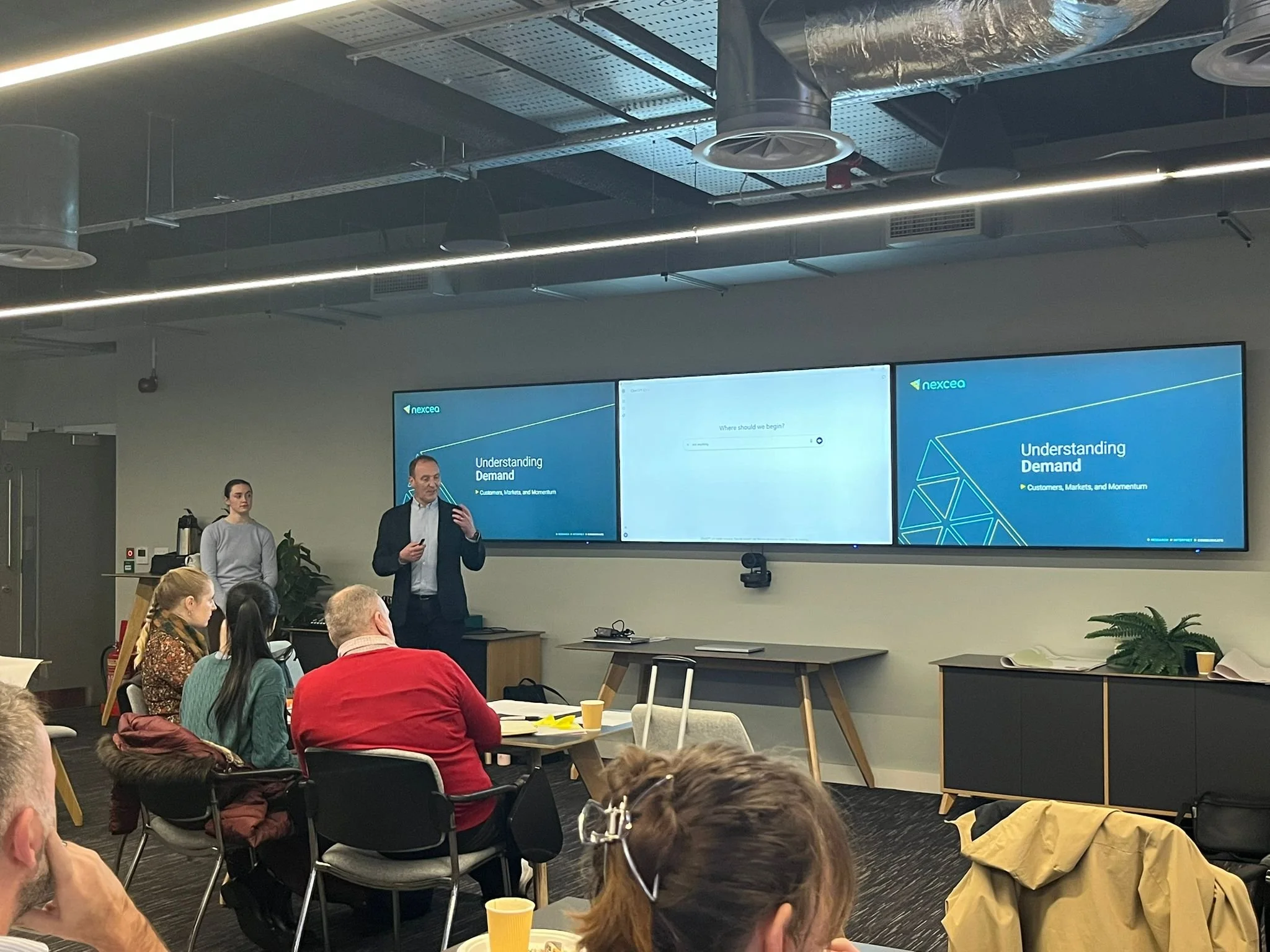
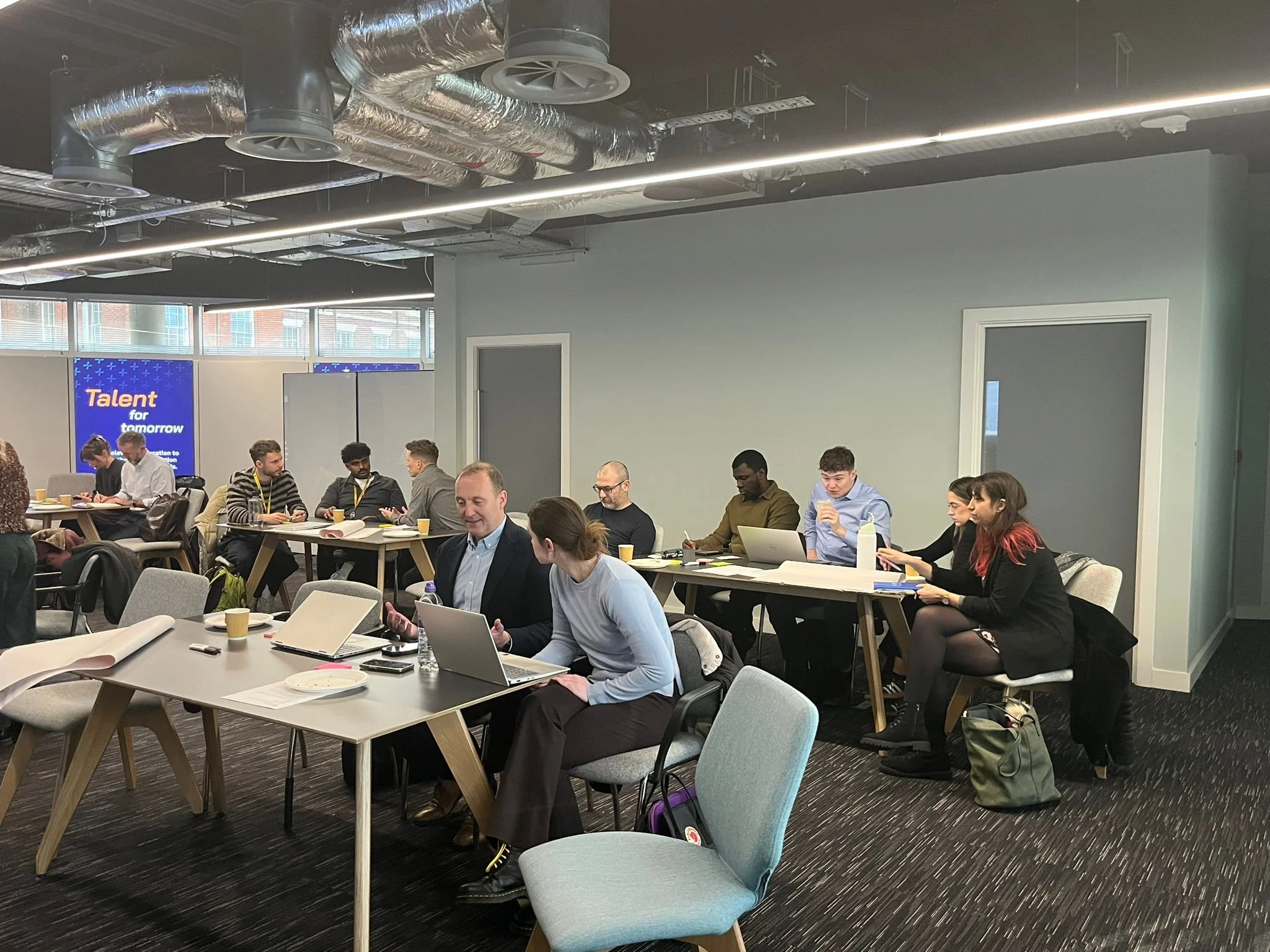
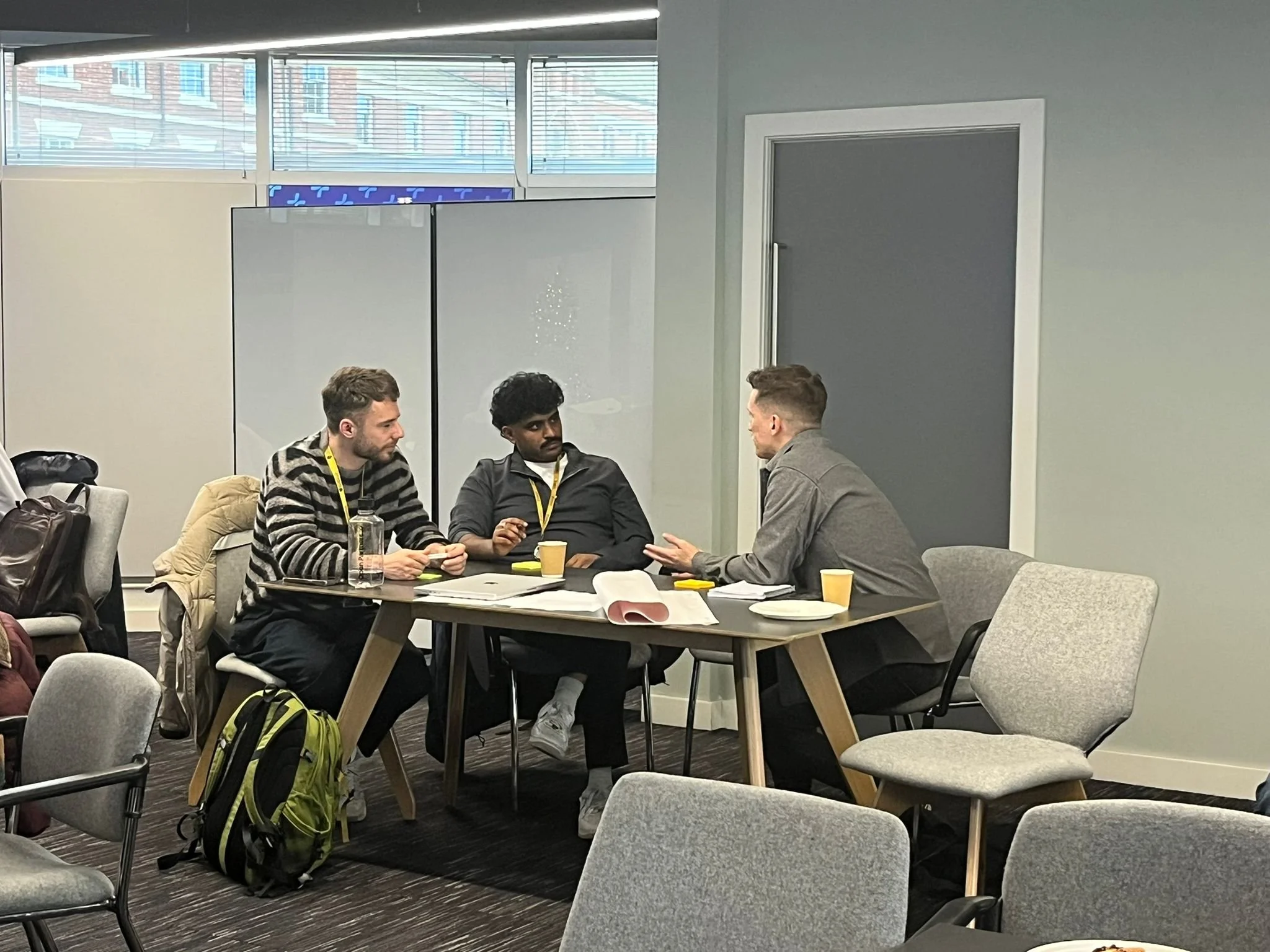
The week began with an online masterclass led by Dr Paul Riley from Nexcea Life Science Consultancy, which laid crucial groundwork for the in-person session that followed. Paul's message was clear: great ideas fail all the time, not because the technology is weak, but because real demand was never properly understood.
Paul walked the Fellows through what “demand” actually means in health innovation. This goes far beyond users liking an idea. It means understanding the difference between who benefits, who uses, and who buys — three groups that are rarely the same in mental health systems. Crucially, Paul emphasised that demand is proven through behaviour, not enthusiasm. Evidence comes from conversations, pilots, uptake, and repeated signals from the system, not from polite nods in meetings or excitement about new tech.
Paul’s in-person session took a highly practical approach, walking through tools for grounding ideas in real-world evidence. Fellows explored how emerging methods, such as LLM-based landscape mapping, can be used as a starting point to scan the system for signals of demand, including policy priorities, funding intentions, workforce pressures, and potential gaps. Paul covered how to interrogate this data, conduct interviews and gather reliable, unbiased data in a structured and systematic way, strengthening the robustness and defensibility of a proposition.
A key theme emerged this week: evidence gathering and relationship building are not separate activities.
Stakeholder conversations have a dual purpose: they help validate or challenge assumptions, but they also build trust with the people who shape decisions. Over time, these individuals can become key opinion leaders, champions, or critical friends – all essential when navigating complex systems like the NHS.
Surfacing Risky Assumptions
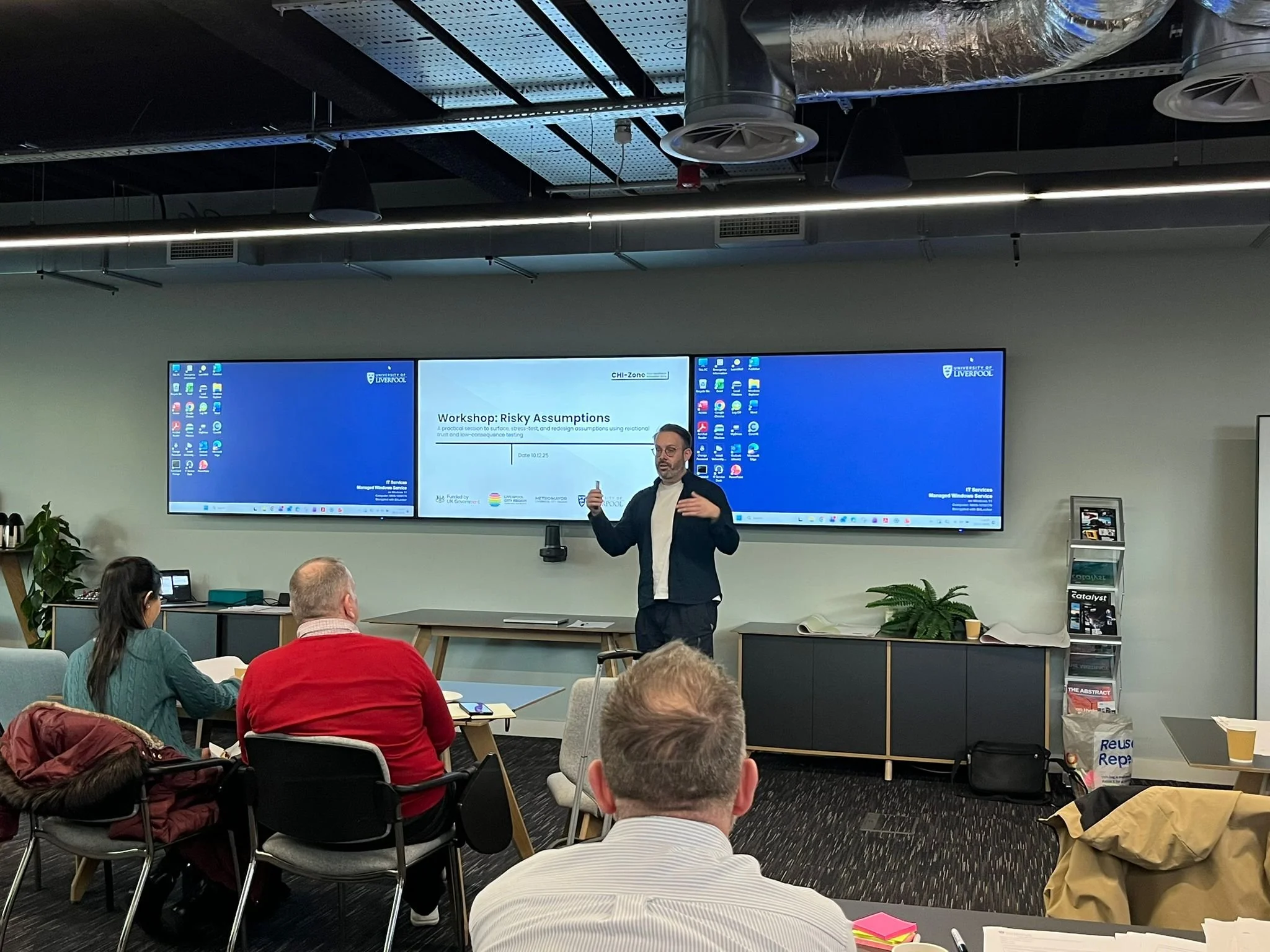
Building on this, the CHI-Zone’s Design Manager Joe led an interactive, hands-on workshop focused on removing bias and assumption testing. This brought together Paul’s insights with an earlier session with Tom Tobia on going from zero to one, a problem-centred approach to innovation.
Fellows were asked to list out everything they were assuming about their work. Assumptions about users, technology, behaviour, value, operations. Things like “people will trust this”, “this will save time”, or “clinicians will want to use it”.
These assumptions were then mapped by risk and consequence. Which ones would seriously undermine the idea if they turned out to be wrong? Which could be tested safely and early, before too much time or resource was invested?
The sweet spot, as Tom and Joe framed it, is high-risk, low-consequence assumptions. These are the beliefs most likely to derail a project, but also the easiest to test quickly if you’re willing to admit uncertainty. Rather than aiming for perfect answers, the workshop encouraged Fellows to design “tiny tests” — the smallest possible actions that could reduce risk without causing harm. Importantly, Tom and Joe emphasised the role of relational trust in these tests. Being honest about not having all the answers, inviting people into the process, and treating stakeholders as collaborators rather than validators.
What This Means for the Fellowship
We chose to take a deep dive into this subject because “market research” is often undervalued, yet it underpins everything that follows. In the New Year, the Fellowship will build on these foundations, learning from sector experts on how to sell a proposition and effectively bring solutions to market.
If you’d like to know more about the Fellowship, or are interested in getting involved with future cohorts, drop us an email.
Stay up-to-date with the latest CHI-Zone news on our LinkedIn.